Overland Track Booking: Dates, Permits And Guided Places
The Overland Track runs a strict seasonal booking system with a daily cap on independent walkers. Here is how the dates, fees and rules work, and how a guided place changes the equation.
Short answer
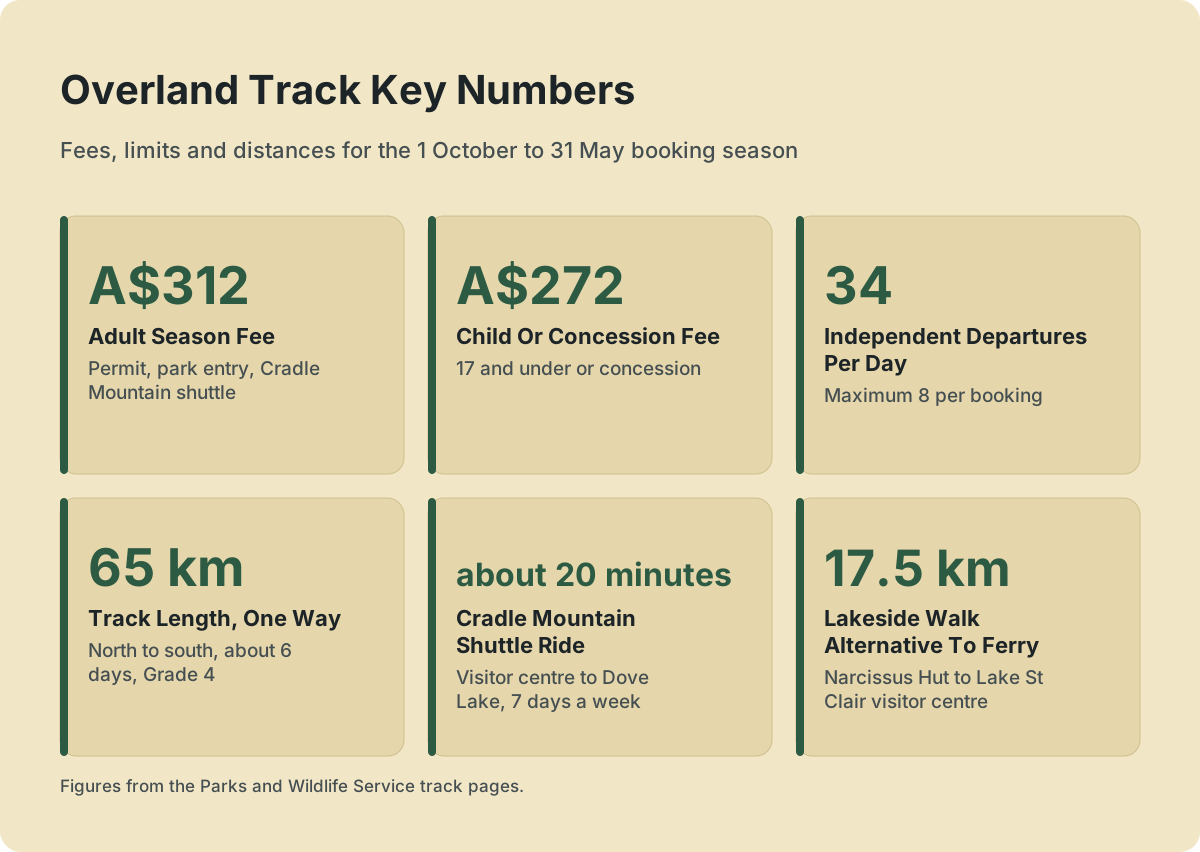
The Parks and Wildlife Service opens Overland Track bookings for a season running 1 October to 31 May, with a fee of A$312 adult and A$272 child or concession that includes park entry and the Cradle shuttle. Up to 34 independent walkers may start per day, north to south only. Winter, 1 June to 23 September, is registration only.
The Overland Track is a 65 km, six-day, Grade 4 walk through the Tasmanian Wilderness World Heritage Area, and it is one of the few Australian walks where you cannot simply turn up and walk in the busy months. The Parks and Wildlife Service runs a booking season from 1 October to 31 May, caps independent departures at 34 walkers a day, and requires everyone to walk north to south. A guided place with a licensed operator works differently: the operator holds the walk logistics, the food and the accommodation, and you buy a seat on their departure. Neither option is sold on Tasmania Multi-Day Tours, but the mechanics below are what every walker needs before choosing between them, and the short guided trips that touch the same country are here for comparison.
If a shorter guided escape is what fits your calendar, start with the short guided trips from Hobart and Launceston, then come back to the permit detail.
Quick Facts
| Fact | Detail |
|---|---|
| Track length | 65 km one way, about 6 days, Grade 4 |
| Booking season | 1 October to 31 May inclusive |
| Season fee | A$312 adult, A$272 child (17 and under) or concession |
| What the fee includes | Park entry and the Cradle Mountain shuttle |
| Daily independent cap | Up to 34 walkers may depart per day, maximum 8 per booking |
| Direction rule | North to south only during the booking season |
| Winter window | 1 June to 23 September: registration only, park pass required |
| Usual finish | Narcissus Hut, then a privately run ferry (fee, booking required) or a 17.5 km lakeside walk |
When Can You Book The Overland Track?
You can book The Overland Track for the walking season running from 1 October to 31 May inclusive, and because daily departures are capped at 34 independent walkers with a maximum of 8 per booking, quotas sell out. No date is truly open until your permit is confirmed, so plan and book ahead to lock in preferred dates within the season.
That single paragraph is the heart of Overland Track booking, and every part of it comes from the Parks and Wildlife Service's own track pages, which are worth reading in full before you commit: the official Overland Track page carries the season, the fee and the shuttle rules. The dates are not a suggestion. Walk north to south only during the booking season is a condition of the permit, not a recommendation, and the service states it plainly in its frequently asked questions, alongside the 34-walker daily figure and the 8-per-booking maximum.
Planning around the cap matters more than most first-time walkers expect. If you want a specific start date in the peak of summer, the practical approach is to be ready when sales open and to hold alternative dates in your head. The service never promises that a date will still have places, and any article that does is guessing. Group organisers should note the 8-per-booking limit: a party of ten is two bookings, and there is no guarantee both land on the same start date.
The winter window is a different animal. From 1 June to 23 September the booking system closes and the track becomes registration only, with a valid park pass still required. Winter days are short, conditions are harder, and the registration system exists so the service knows who is on the track. Anyone considering it should read the official winter guidance carefully and be blunt with themselves about their experience level.
What The Overland Track Fee Includes And What It Leaves Out
The A$312 adult fee buys the permit itself, park entry for the walk, and the Cradle Mountain shuttle from the visitor centre to Dove Lake, a ride of about 20 minutes running seven days a week with seasonal times. It does not buy transport to Cradle Mountain, transport from Lake St Clair, the privately run ferry across the lake, food, hut bedding or any guide. Walkers who add up only the permit fee will under-budget the walk.
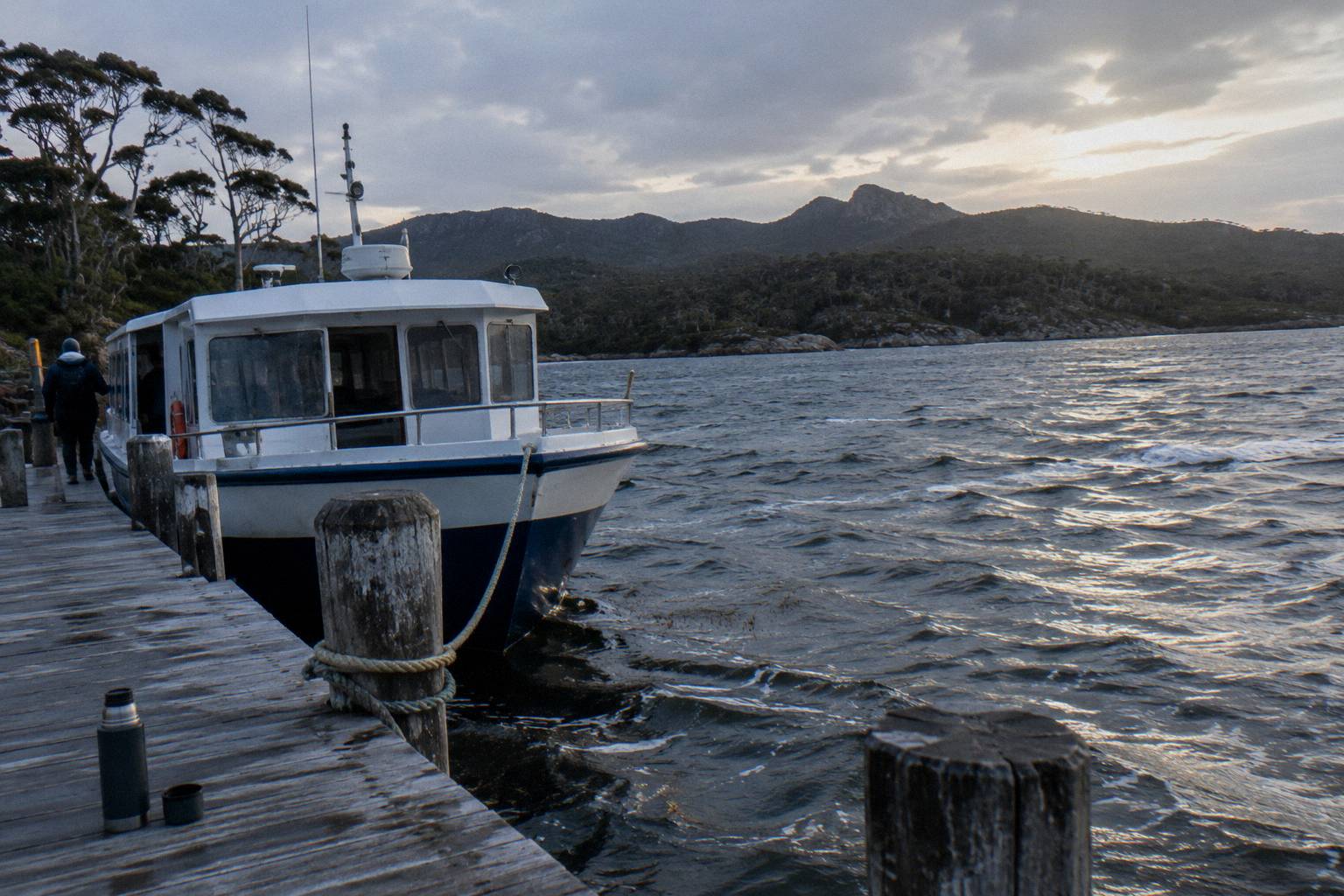
The finish is where the surprise usually lands. The walk usually finishes at Narcissus Hut at the northern end of Lake St Clair, and from there the choice is a privately run ferry to the Lake St Clair visitor centre, which carries its own fee and requires a booking, or a 17.5 km walk along the lake shore to reach the same place. Neither the ferry nor any bus from Lake St Clair is inside the permit fee, and the service says so explicitly. Build the exit into the plan on day one, not day five.
| Item | In the A$312 fee? | Notes |
|---|---|---|
| Walking permit, season dates | Yes | 1 October to 31 May, north to south only |
| Park entry | Yes | Included with the permit |
| Cradle Mountain shuttle | Yes | Visitor centre to Dove Lake, about 20 minutes, 7 days a week |
| Transport to Cradle Mountain start | No | Arrange separately |
| Lake St Clair ferry | No | Privately run, separate fee, booking required |
| Transport from Lake St Clair | No | Arrange separately |
| Food and cooking gear | No | Fuel stoves only in the World Heritage Area |
| Guide, bedding, tents | No | Independent permit, not a guided product |
One extra rule costs people real money: private vehicles are not allowed in the Cradle Mountain park during shuttle hours, which is exactly why the shuttle is bundled into the permit. If you are driving yourself to the start, plan on parking at the visitor centre and riding the shuttle like everyone else.
For walkers weighing the whole cost picture rather than the permit alone, the deeper money comparison sits in how much a guided or independent Overland walk actually costs once everything is counted. The permit is the smallest line in most budgets.
Independent Permit Or Guided Place: Which Suits You
An independent permit means you carry everything, cook everything, navigate everything and take the weather as it comes, inside the 34-walker daily cap and the hut system. A guided place means an operator holds the logistics, the meals and the accommodation, and runs its own departure calendar separate from the independent quota. Neither is better in the abstract: the comparison is really about days available, fitness and how much planning you want to own.
The trade-offs are concrete. Independent walkers pay A$312 and then feed, equip and transport themselves, and they carry a full pack the whole 65 km. Guided guests pay an operator one price, which the operator states on its booking page, and in exchange the operator carries or arranges most of the load. Tasmanian Walking Company, for example, describes packs in the six to eight kilogram range on its guided Tasmanian walks, and its guided Overland product runs a full seven days rather than six. Whether that trade is worth it depends on your legs, your dates and your appetite for logistics.
| Question to ask | Independent permit answer | Guided place answer |
|---|---|---|
| How do I get a spot? | Parks and Wildlife Service booking, 34 a day, quota risk | Operator's own departure calendar |
| What does it cost up front? | A$312 adult, A$272 child or concession | Operator's price, ask the operator |
| Who carries the gear? | You, full pack, all 65 km | Operator arrangements, ask when booking |
| Meals | Yours to carry and cook | Ask the operator what is included |
| Direction and dates | North to south, 1 Oct to 31 May, or winter registration | Per the operator's departure list |
| Fitness floor | Grade 4, six days, your judgement | Ask the operator what pace to expect |
A useful thought experiment: picture your sixth day, in rain, with a heavy pack, on a section you have never seen. If that picture appeals, the independent permit is built for you. If it does not, a guided place or a different walk entirely is the saner route, and Tasmania has several shorter guided options that deliver alpine country without a six-day commitment.
That is where guided trips come in. None of them is an Overland Track trip, and the track itself is booked through the parks system. What they offer is Cradle Mountain and guided walking in smaller doses, which suits a lot of travellers who like the idea of the high country more than the idea of six days under a full pack.
The Overnight At Cradle deserves a particular look for anyone testing their legs before a bigger walk. It is a 2-day, 1-night guided trip from Hobart, from US$299 per person, with a night at Lakeside Motel, breakfast, the national park ticket and the Cradle shuttle bus ticket all named on its booking page. Tour amounts on trips named here are in US dollars. It covers the drive, the shuttle logistics and one night near the mountain, which is a practical rehearsal for the terrain without a permit, a quota or a six-day pack.
- The One-Day East Coast TasteUS$102
- The One-Day Cradle FixUS$165
- The Two Icons From LauncestonUS$272
- The Overnight At CradleUS$299
- The Big 3 One-WayUS$390
The Overnight At Cradle trip page carries the full details, and if the dates work, Check availability before finalising any wider Tasmania plan.
How The Daily Cap And The North-To-South Rule Shape Your Dates
The 34-walker daily departure cap and the north-to-south direction rule are the two facts that most change date planning. With a hard ceiling on independent starts each day, popular summer dates go first, and the direction rule means there is no dodging the crowd by walking backwards: in season everyone walks the same way, as a permit condition. Group bookings cap at 8 people, so larger parties split across permits and may not share a start date.
Read that as a planning instruction rather than trivia. Flexible walkers give themselves three or four candidate start dates. Rigid planners, locked to flights or leave dates, accept a real risk that their exact date is gone when they try to book. Midweek starts and the shoulder months inside the season, October, November and March, are the sensible places to look first, though the service guarantees nothing about which dates fill.
The cap exists to protect both the track and the experience. The Overland Track's history as a managed walk is tied to exactly this kind of control, and the hut network, the boardwalk sections and the quota are all part of one system. A walker who respects the quota is also, in a small way, the reason the walk still feels remote.
There is no legal workaround. Walking the reverse direction in season breaches the permit conditions. Walking in winter flips the system to registration only, which is a different and more serious commitment, not a quiet back door into a summer-style walk.
Winter Registration: Walking Without A Booking Season
From 1 June to 23 September the booking system stands down and the track becomes registration only, with a valid park pass still required. The service's own winter guidance treats these months as a different walk: short days, cold conditions, and a requirement that winter walkers have the experience and gear for alpine conditions. Registration exists so authorities know who is on the track, and it is not a cheaper version of the summer walk.
The practical differences pile up quickly. Fewer services run in the shoulder and winter months, the Cradle shuttle operates with seasonal times, and weather can close sections of the walk with no negotiation. The service's position is that winter walkers take on substantially more responsibility, and any clear self-assessment starts from that baseline rather than from optimism.
For most travellers planning a first Tasmania walking trip, winter registration is the wrong answer, and there is no shame in that conclusion. The summer season, or a guided walk, or a shorter trip like the ones compared in guided multi-day walks across Tasmania, delivers more of the experience for less of the risk.
Guided Overland Walks And Who Runs Them
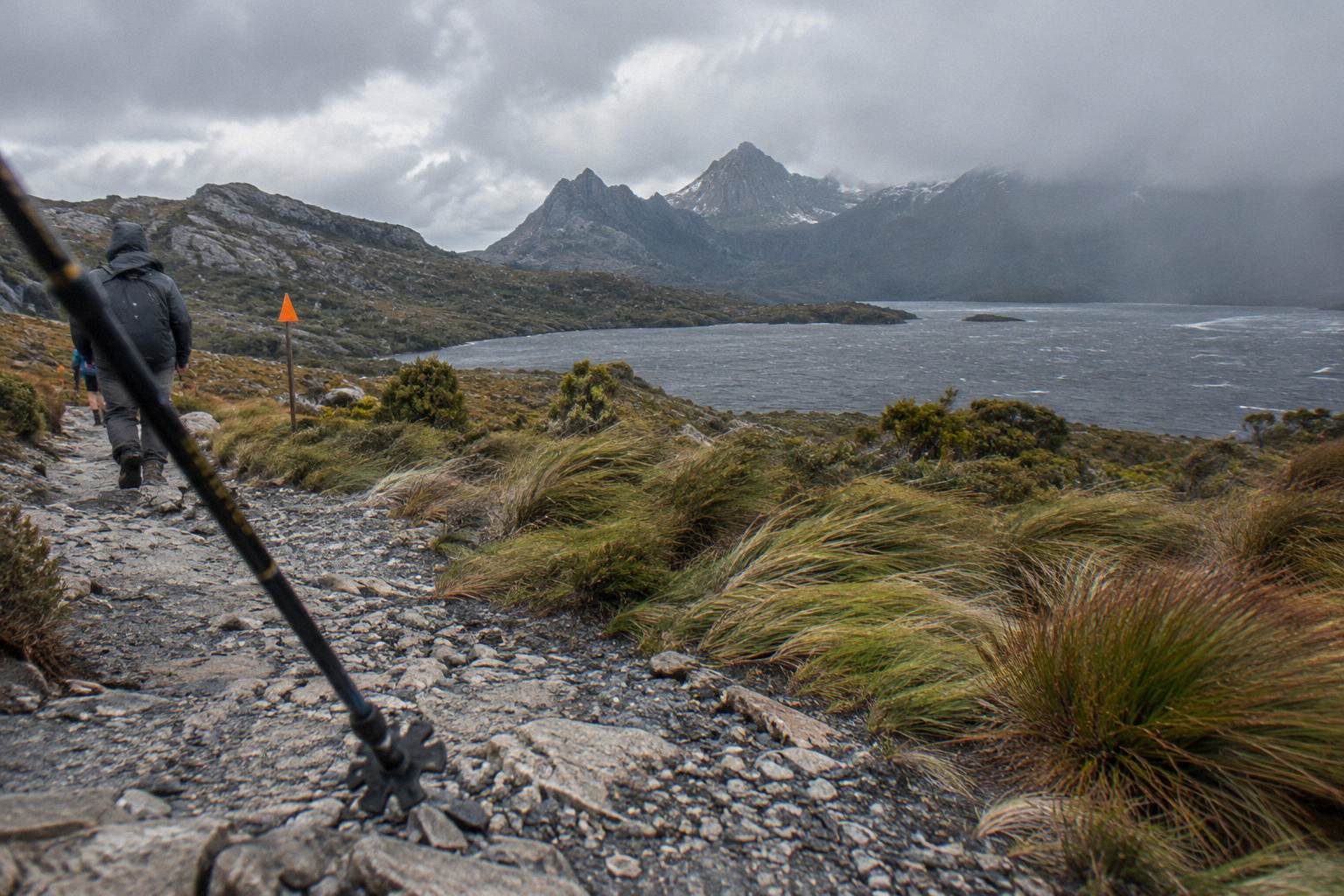
Two licensed operators run guided Overland Track walks: the Tasmanian Walking Company offers a 7-day Signature Walk with daily departures from 1 October to 1 May plus a shorter 5-day version, while Tasmanian Expeditions, part of the World Expeditions Travel Group, runs a 7-day Cradle Huts walk.
Both operators' facts come from their own pages, and their prices are theirs to state: ask the operator directly. What can be compared is structure. Tasmanian Walking Company's departure calendar, daily through the core season, is the widest set of guided dates on the track. Its 5-day version compresses the walk for walkers with less leave. Tasmanian Expeditions' walk is built around its own hut network, with walking days the operator describes as up to 6 or 7 hours.
A guided place sidesteps the independent quota because the operator runs its own departures under its own licence, but it does not sidestep the calendar: guided departures are finite too, and the popular weeks fill the same way. The rule of thumb on timing is in how far ahead to book a multi-day Tasmania tour, and it applies doubly to a walk with a hard season.
For walkers who want the lodge-based, guided, small-group experience but on a shorter and warmer-coast track instead, The Lodge-Based Capes Walk is a 4-day, 3-night guided walk from Hobart, from US$2,084 per person, with lodge accommodation at Stewarts Bay Lodge or Three Capes and Tasman Lodge, all meals named on its booking page and a group maximum of 10. It is a real bookable trip, and it is the closest cousin to the guided Overland products in style. The Lodge-Based Capes Walk page has the full itinerary, and Check availability once you have weighed it against a six-day alpine walk.
The capes country it covers is described in the Parks and Wildlife Service's own Three Capes Track pages, which also explain the self-guided hut walk that shares the headland, a different product again at A$650 adult.
Getting To The Start And Away From The Finish
Your permit fee does not include transport, so you arrange your own ride to Cradle Mountain and your own way out from Lake St Clair. Launceston (141 km, about 2 hours) or Devonport (79 km, about 1 hour 20) are the practical gateways, versus Hobart's 320 km and about 4 hours; from Narcissus Hut, the ferry or the 17.5 km lakeside walk are the two exits.
| Leg | Distance and time (Discover Tasmania) |
|---|---|
| Launceston to Cradle Mountain | 141 km, about 2 hours |
| Devonport to Cradle Mountain | 79 km, about 1 hour 20 |
| Hobart to Cradle Mountain | 320 km, about 4 hours |
| Hobart to Launceston | 200 km, about 2 hours 20 |
| Devonport to Hobart | 280 km, about 3 hours 15 |
The shuttle detail matters at the start end. Private vehicles are not allowed in the park during shuttle hours, so the permit's included shuttle from the visitor centre to Dove Lake is the standard way onto the track, running seven days a week with seasonal times. Arriving late matters less than you might fear, but arriving without a shuttle plan matters a lot.
At the finish, the ferry from Narcissus needs its own booking and fee, and the lakeside walk adds real kilometres to an already long final day. Walkers flying out the same evening as their finish should not: the service's own guidance treats the exit as a separate leg of the journey.
If The Dates Do Not Work: Cradle Mountain Without The Full Track
When the quota, the season or the six-day commitment defeats the plan, Cradle Mountain itself is still reachable on guided trips that need no Overland permit at all. The Overnight At Cradle runs 2 days and 1 night from Hobart from US$299 with the park ticket and shuttle ticket included. The Two Icons From Launceston covers Cradle Mountain and Wineglass Bay over 2 days from US$272.
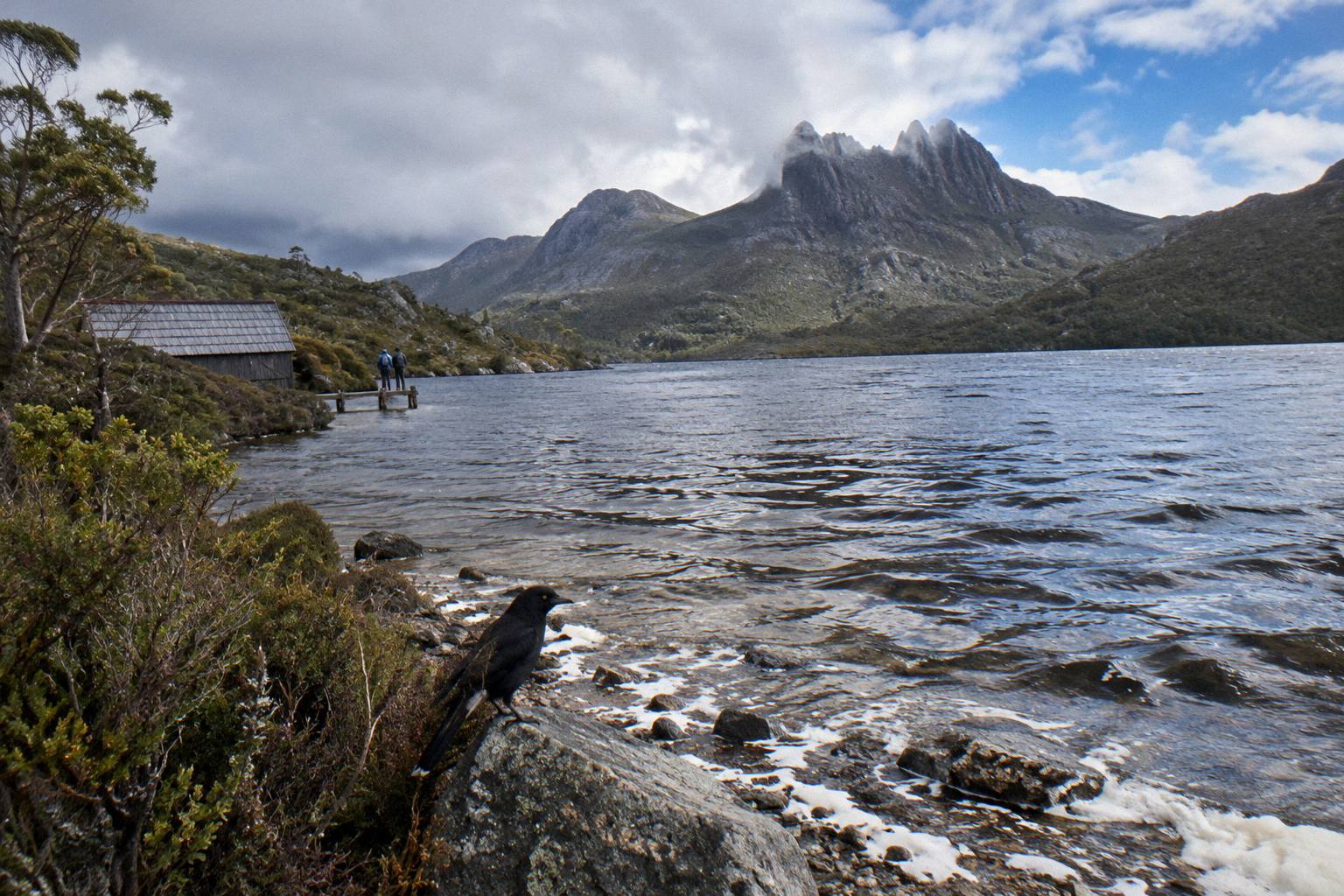
The choice among them comes down to base city and nights available. Hobart starters get The Overnight At Cradle with its motel night and included breakfast. Launceston starters with one day to spare get The One-Day Cradle Fix, whose day tour page has the details. Travellers who want two icons in two days and will book their own beds get The Two Icons From Launceston, which includes national park passes for both Cradle Mountain and Freycinet but not accommodation, per its booking page.
That last point catches people out, so hold onto it: several short trips include park entry and transport but expect you to book your own nights. Ask the operator, or check the trip page, before assuming a bed comes with the seat. The comparison between short guided formats is worth studying before you commit either way.
What Trips People Up Before Booking An Overland Place
The recurring mistakes are treating the permit as the whole cost, assuming a date is open until it is confirmed, forgetting the two transport legs at each end, and misreading what the shuttles and ferries include. Walkers also misjudge the winter registration window, treating it as a quiet summer walk, and group leaders forget the 8-per-booking ceiling. The permit fee includes park entry and the Cradle shuttle and nothing else that moves you, feeds you or sleeps you.
Check yourself against this list before money changes hands. Confirm the start date exists in the system, not in hope. Price the Lake St Clair ferry and the buses on both ends. Check whether a fuel stove is in the kit, because the World Heritage Area allows nothing else. Decide whether six Grade 4 days under a full pack is the right walk, or whether a shorter guided trip delivers the same country with none of the quota risk.
Every figure comes from the trip's own booking page.
Common Questions About Overland Track Booking
When Can You Book The Overland Track?
The booking season runs 1 October to 31 May inclusive. The Parks and Wildlife Service fee is A$312 adult and A$272 child (17 and under) or concession, including park entry and the Cradle shuttle. Quotas sell out, so never assume a date is open until a permit is confirmed.
How Many Walkers Can Start The Overland Track Each Day?
In the booking season, up to 34 independent walkers may depart per day, north to south only, with a maximum of 8 walkers per booking. Larger groups must split into separate bookings and may not share a start date.
Does The Overland Track Permit Include Park Entry?
Yes. The Parks and Wildlife Service states the fee includes park entry and the Cradle Mountain shuttle. It does not include transport to Cradle Mountain, the Lake St Clair ferry, food or any guide.
Can You Walk The Overland Track In Winter?
From 1 June to 23 September the booking system closes and the track becomes registration only, with a valid park pass still required. The service treats winter walking as a more serious undertaking with short days and alpine conditions.
Can I Book A Guided Overland Track Walk?
Guided walks exist and are sold by the licensed operators on their own sites: Tasmanian Walking Company runs a 7-day Signature Walk with daily departures 1 October to 1 May, and Tasmanian Expeditions runs a 7-day Cradle Huts walk. Ask the operator for prices and bookings.
What Is The Cheaper Way To See Cradle Mountain Without A Permit?
Guided trips that visit Cradle Mountain need no Overland permit. The Overnight At Cradle runs from US$299 per person for 2 days and 1 night with the park ticket and shuttle ticket included, and The One-Day Cradle Fix runs from US$165 for a 10-hour day from Launceston.