Tasmania Walking Tours: Lodge Walks Or Camping Treks?
Lodge walks, hut treks and camping walks in Tasmania are three different products with three different price tags and pack weights. Here is what each one involves, what the fees cover, and where the guided options sit.
Short answer
A lodge walk in Tasmania means a bed, hot meals and a small guided group, from US$2,084 per person for the 4-day Lodge-Based Capes Walk. Hut walking on the Three Capes Track is a Parks and Wildlife Service self-guided product at A$650 adult. Camping treks are run by specialist operators off site. Packs, fitness and budgets separate the three.
Choosing a walking style in Tasmania comes down to one question: do you want a bed and a cooked meal at the end of each day, or are you happy to carry your home on your back? Both exist here, and they are priced and packed very differently. The guided walking holidays hub gathers every walking-forward trip in one place.
Quick Facts
| Fact | Detail |
|---|---|
| Lodge walks available | The Lodge-Based Capes Walk, 4 days, 3 nights, from US$2,084 per person, group max 10 |
| Lodge accommodation named | Stewarts Bay Lodge or Three Capes and Tasman Lodge, per the operator |
| Hut walking (self-guided) | Three Capes Track, 48 km, 4 days, 3 nights, Grade 3, A$650 adult, Parks and Wildlife Service |
| Camping walk example | The Maria Island Walk, 4 days, October to April, bush camps plus Bernacchi House on the last night |
| Pack weight, camping example | 6 to 8 kg on the Maria Island Walk, per that operator |
| Daily distance, camping example | 10 to 15 km a day on the Maria Island Walk |
| Fuel stove rule | The only stove allowed in the World Heritage Area, per the Parks and Wildlife Service |
| Nearest vehicle tour with island walking | The Maria Island Route, 6 days, from US$1,006 per person |
What A Lodge Walk In Tasmania Actually Looks Like
A lodge walk puts you in a private bed every night with meals cooked for you. The guided version to compare against is the 4-day Lodge-Based Capes Walk from US$2,084 per person. Park Trek Walking Holidays runs it with a group maximum of 10, accommodation at Stewarts Bay Lodge or Three Capes and Tasman Lodge, and nearly all food covered: breakfast (3), lunch (4) and dinner (3). Park entry fees and Hobart transfers are in the fare.
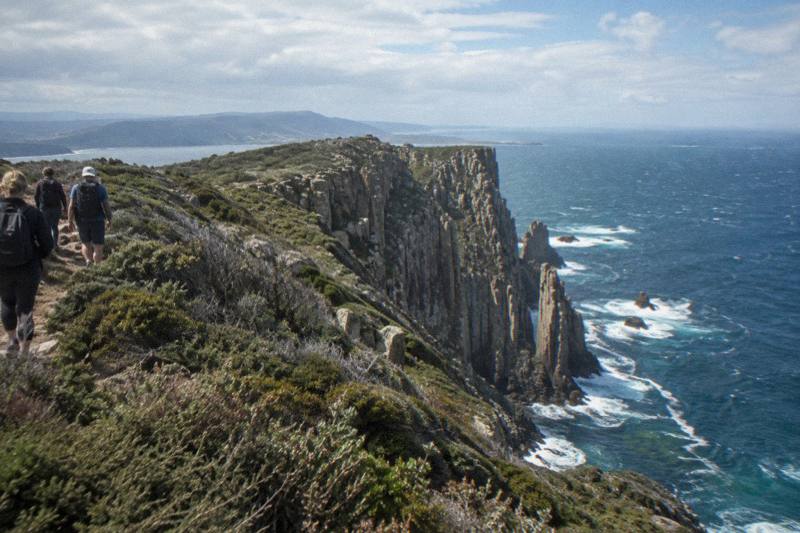
The itinerary stays on the Tasman Peninsula. Day 1 runs Hobart to Crescent Bay and Mount Brown, Day 2 from just south of Port Arthur to Cape Raoul, Day 3 from Fortescue Bay to Cape Hauy, and Day 4 is a wilderness cruise. That final day means you walk three days and boat the fourth, a shape that suits walkers who want the coastline without a fourth consecutive walking morning. Port Arthur sits 90 minutes south-east of Hobart, so the transfers are short by Tasmanian standards.
What you are paying for is the removal of weight and catering. Daily snacks, tea, coffee and cake plus trail mix are included, and the only listed exclusions are traveller's insurance and alcoholic beverages. Cancellation is free up to 60 days before, with a full refund. You still need walking fitness: the operator grades the days as guided walks, and Cape Hauy and Cape Raoul both involve sustained climbing on formed tracks.
Tasmanian Walking Company also runs lodge-based walking in the same region. Its Three Capes Signature Walk covers 53 km over 4 days at a moderate grade, starts in Hobart at about 9:00 to 9:30am from listed pickup points, and takes a minimum of 7 and a maximum of 14 guests in private lodges, with departures year round and the Signature season running September to the end of May. Ask the operator directly for its price. Both operators' products are separate from anything a parks agency runs, a distinction that matters when you start comparing fees.
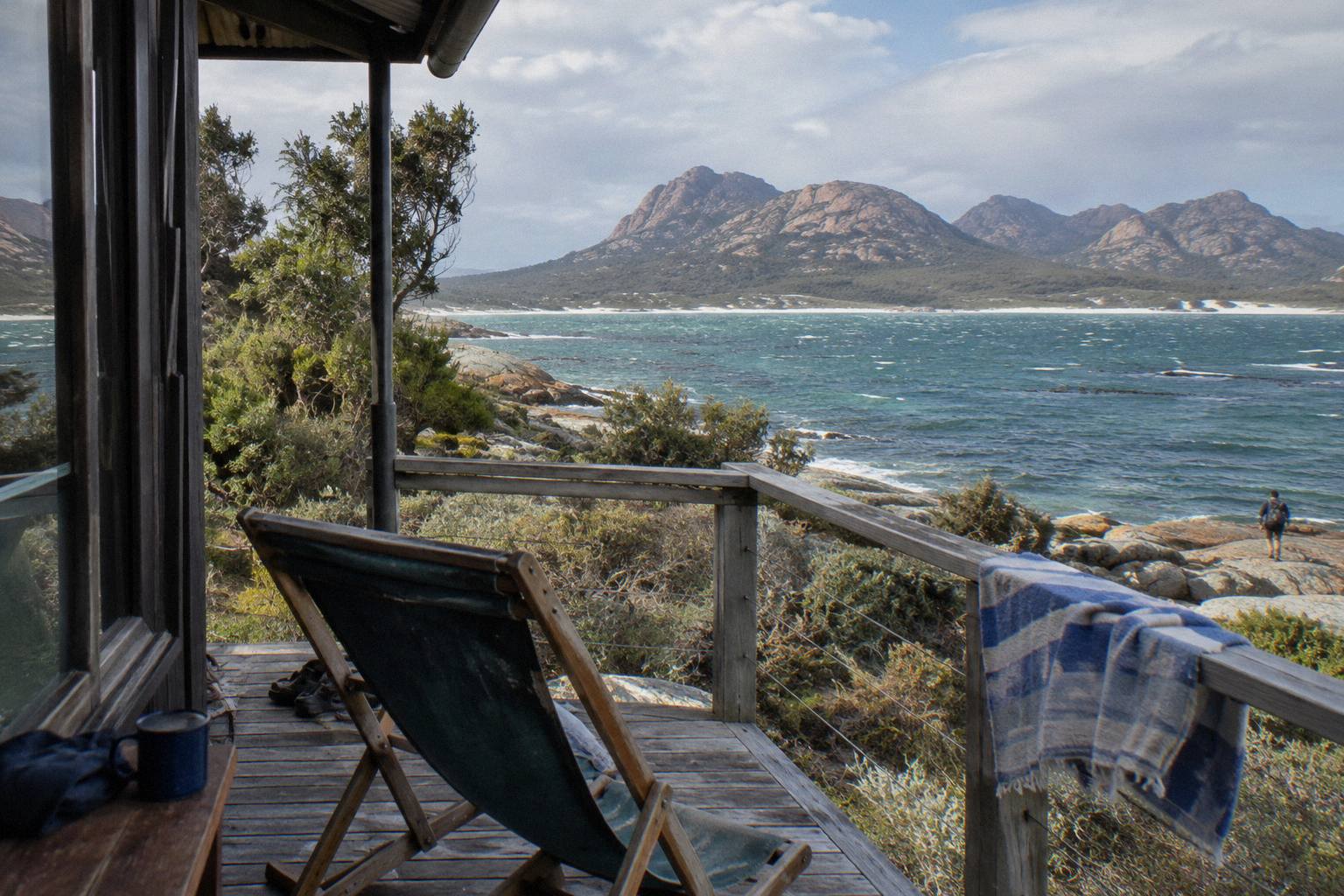
If the lodge idea appeals but the peninsula is not your target, the broader question of multi-day guided hikes in Tasmania breaks the island's walking regions down one by one, and the specialists behind them, without assuming any single style.
What Camping Treks In Tasmania Involve
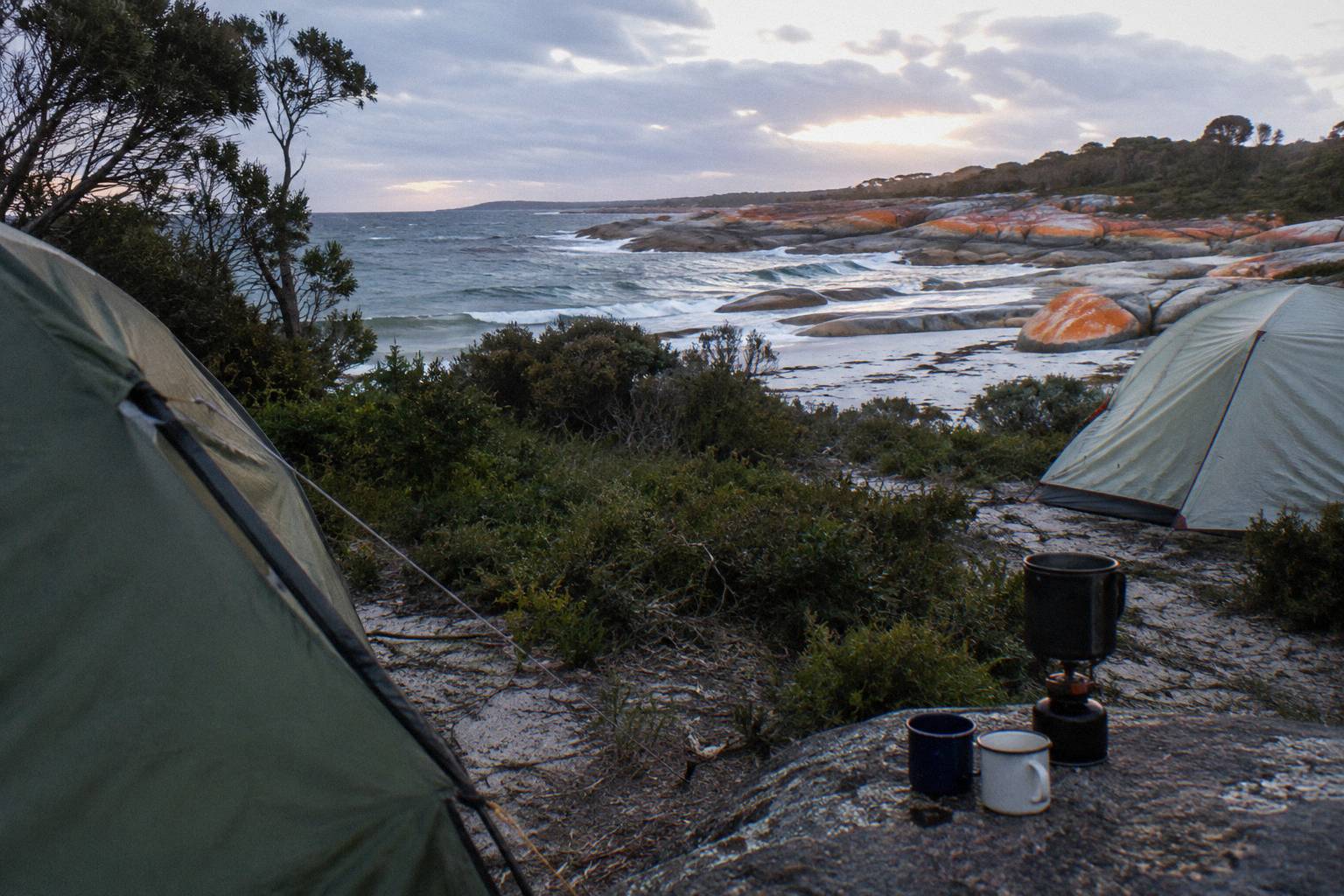
Camping treks trade the bed for a lighter wallet and a heavier pack. The clearest published example is The Maria Island Walk: 4 days from October to April, walking south to north, carrying packs of 6 to 8 kg, covering 10 to 15 km a day, sleeping in twin-share bush camps with Bernacchi House on the final night. Meals, drinks and pack loan are included, and the minimum age on standard departures is 12.
The bush-camp model is a middle path rather than wild camping. Someone else carries or pre-positions the camp gear, dinner is cooked for the group, and the last night upgrades to a house. You still sleep under canvas most nights, and you still carry a pack every day, just not a full backpacking load. The Maria Island Walk's own pages set the weight expectation at 6 to 8 kg, which is day-pack-plus territory compared with a self-sufficient load.
The island itself shapes the experience. Maria Island is reached by ferry only, has no vehicles at all, and ferry bookings are essential; bikes can go across for a fee. The Parks and Wildlife Service names wombats, devils, kangaroos and Cape Barren geese as wildlife on the island, with no guarantee of a sighting. The Painted Cliffs rock platform is safest within two hours of low tide and there is no clifftop access, and Darlington Probation Station belongs to the Australian Convict Sites World Heritage listing from 2010.
Independent camping carries its own rulebook in the wilder parts of the state. A fuel stove is the only stove allowed in the World Heritage Area, and seasonal campfire bans change from year to year, so check the fire rules with the Parks and Wildlife Service before you plan to cook on flame. Booking a ferry fare and a campsite yourself is entirely doable: the Encounter Maria Island ferry from Triabunna publishes adult same-day returns at A$59, overnight returns at A$70, concessions at A$47.50 and children 4 to 16 at A$36.50.
For walkers weighing the guided versus independent question on one specific island, the Maria Island guided walking options cover the ferry, the tide rule and the operators in detail.
Hut Walking On The Three Capes Track
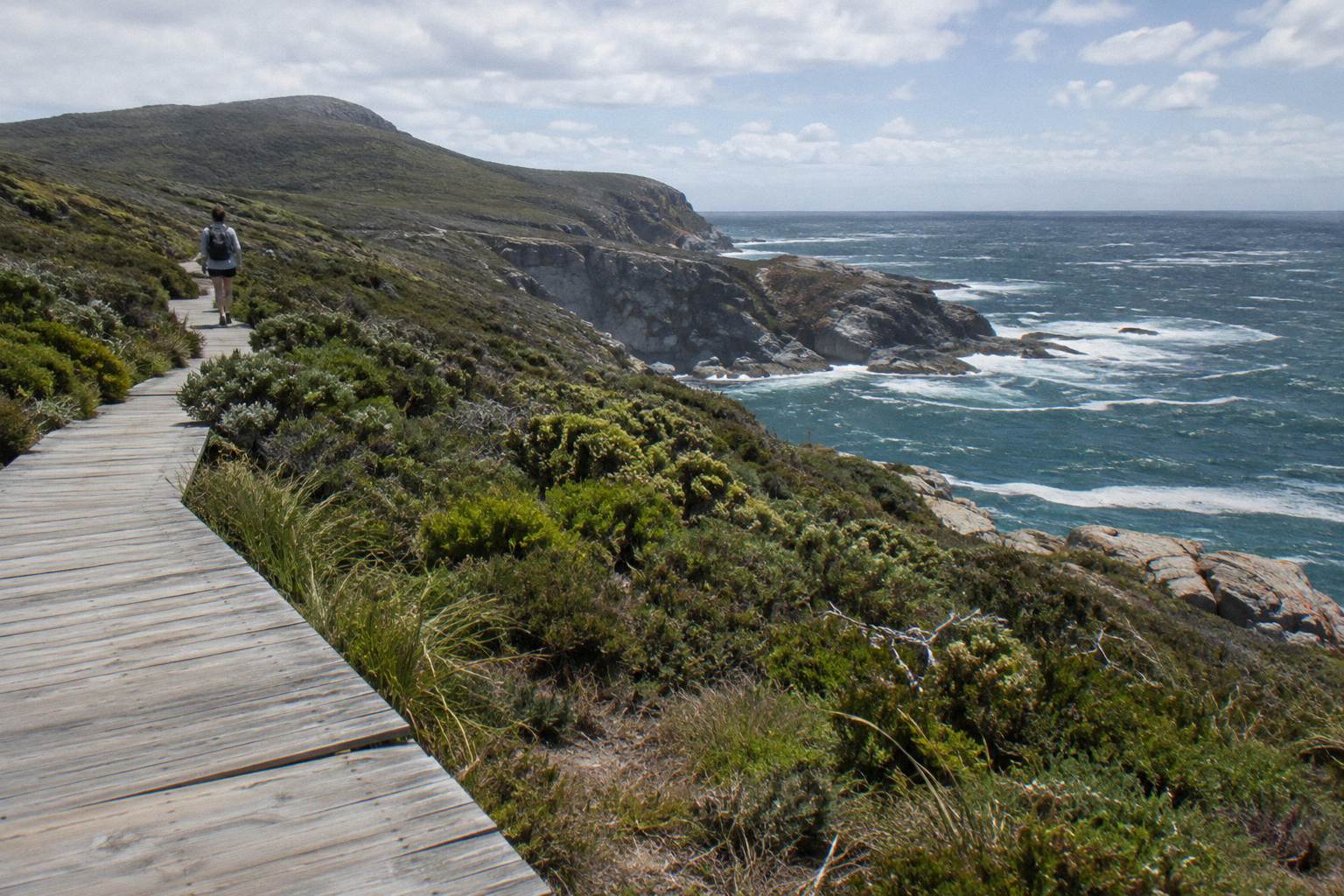
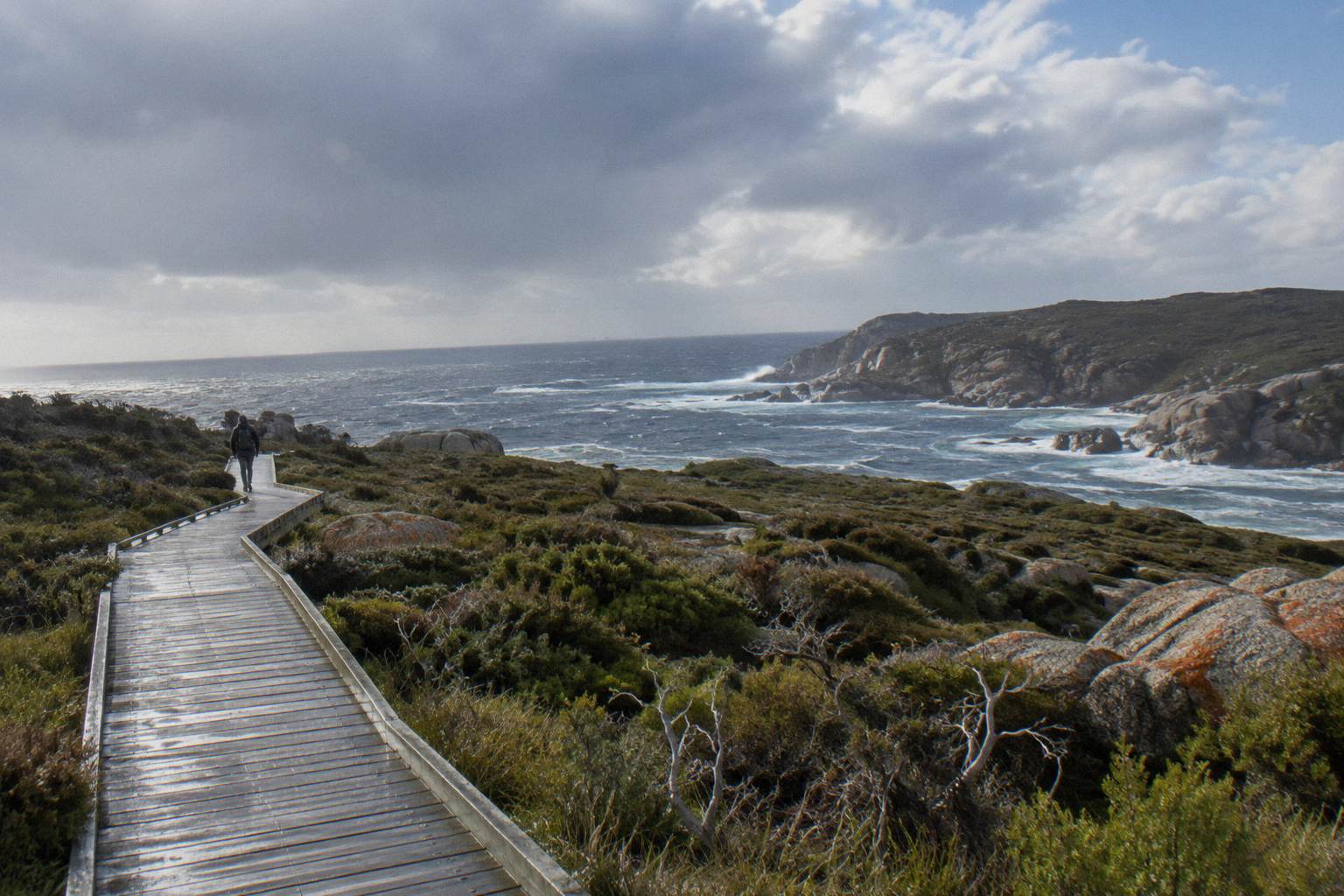
Hut walking on the Three Capes Track is a 4-day, 3-night, 48 km self-guided walk on the Tasman Peninsula, graded 3, with the hut sitting between lodge and camp. The Parks and Wildlife Service fee is A$650 per adult and A$515 concession or child, reviewed each year, and bookings are essential.
Hut walking means a roof and a mattress but no cooked dinner and no guide. You carry your food, stove and sleeping bag between huts; because the peninsula is inside the World Heritage Area, a fuel stove is the only stove permitted. It is a different product from the guided lodge walk described above, with different fees, different buildings and no operator walking alongside you. Anyone comparing the two should treat the A$650 track fee and the from US$2,084 guided walk as separate purchases, not two prices for one thing.
The track's shape is fixed by the parks agency: 48 km over four days, hut-based throughout, and the cruise and bus legs built into the fee. There is no private vehicle option at either end, and Port Arthur, 90 minutes south-east of Hobart, is the practical gateway. The official Three Capes Track page carries the current fee and booking detail, and it is the only source to trust on those numbers because they are reviewed annually.
If you want the hut country but with a guide, a bed and meals, the guided version is the Lodge-Based Capes Walk, and check availability on its dates if the free cancellation up to 60 days before suits you. The dedicated Three Capes lodge walk or huts comparison works through the same choice at greater length.
What The Fees Cover On Each Style
Reading the inclusions is where the three styles really separate. The lodge walk fare covers beds, almost all meals, park entry and transfers. The hut fee covers the track, a guidebook, park entry, a cruise and a bus, but no food and no guide. The camping walk covers camps, meals and gear loan, but you carry the pack. No style covers travel to Tasmania, and insurance is excluded on the guided lodge trip.
The table below lines up the three styles on what is actually in the fare, using the published facts for each. Tour amounts are in US dollars; the Parks and Wildlife Service fee is in Australian dollars as that agency lists it.
| What is covered | Lodge walk (Lodge-Based Capes Walk) | Hut track (Three Capes Track, self-guided) | Camping walk (The Maria Island Walk) |
|---|---|---|---|
| Bed each night | Yes, Stewarts Bay Lodge or Three Capes and Tasman Lodge | Yes, hut bunks | Bush camps, twin share, plus Bernacchi House last night |
| Meals | Breakfast (3), lunch (4), dinner (3), daily snacks, tea, coffee and cake | No, carry your own | Meals, drinks included |
| Guide | Yes, guided walks and commentary | No, guidebook instead | Yes, per that operator |
| Park entry | Included in fare | Included, plus one day either side | Ask the operator |
| Pack weight on you | Day pack | Full food and sleeping gear | 6 to 8 kg, pack loan included |
| Group size | Maximum 10 | Independent, bookings essential | Ask the operator |
| From price | From US$2,084 per person | A$650 adult, Parks and Wildlife Service | Ask the operator |
Two gaps catch people out. First, transport to the start is generally your problem: the lodge walk includes transfers to and from Hobart CBD, but the hut track's fee explicitly does not include travel to the peninsula beyond the listed bus leg. Second, cancellation terms differ sharply: the Lodge-Based Capes Walk allows free cancellation up to 60 days before with a full refund, while independent hut bookings follow the parks agency's policy. Ask each operator or agency where its refund line sits before you pay.
How Fit You Need To Be And What You Carry
You need moderate fitness and good mobility, and what you carry depends on your trip style: hut walkers face a grade 3 track, the guided lodge trip runs walks on the same peninsula, and the camping example covers 10 to 15 km a day with a 6 to 8 kg pack, while vehicle tours stick to walks of 20 minutes to 4 hours. No source promises an easy day, so pack layers for fast-changing weather.
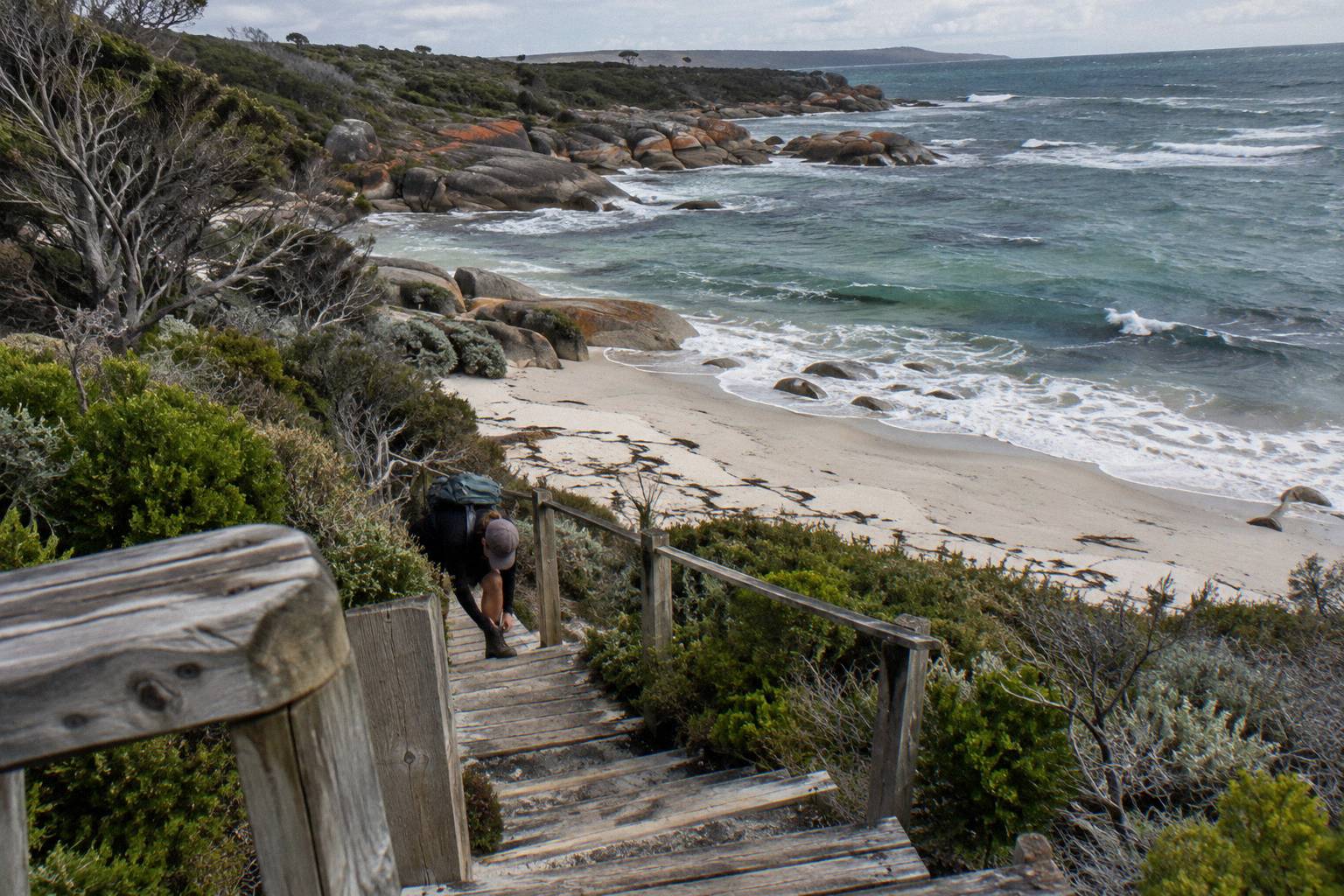
A good self-test is a day of climbing stairs with a loaded day pack. Cape Hauy and Cape Raoul involve sustained ascents and descents on formed tracks, and the Three Capes Signature Walk is graded moderate by its operator over 53 km. On the camping side, the daily distance band on the Maria Island Walk is published by that operator at 10 to 15 km, which sounds modest until it is repeated on consecutive days with a pack. For a fuller treatment, the fitness question has its own write-up in how fit you need to be for a multi-day guided walk, and the packing side is covered in what to pack for a multi-day Tasmania tour or walk.
Climate planning should rest on the two published station records, not on folklore. The Bureau of Meteorology's long-run averages give Hobart mean maximums of 21.8 in January down to 11.9 in July, and Launceston Airport 23.2 down to 10.9, with about 610 mm and 678 mm of annual rain respectively. The safe rule for Cradle Mountain and the west coast is simple: weather changes fast, carry layers, and check with your doctor before a multi-day walk if you have any doubt, then tell the operator when you book.
- The 13-Guest Wildlife TripUS$703
- The Proven 5-Day LoopUS$737
- The Maria Island RouteUS$1006
- The 7-Day Value LoopUS$1151
- The Comfort Stays VersionUS$1672
Ask the operator, whichever style you choose, what pace the group walks at and what happens if a day is beyond you. On a small guided trip a slower walker changes the day for ten people; on a self-guided hut walk you simply arrive late. Knowing which of those pressures suits you is half the decision.
The Overland Track Question
The Overland Track is a walk you book through the Parks and Wildlife Service, which describes it as 65 km one way, six days, Grade 4, with a booking season from 1 October to 31 May and a fee of A$312 adult or A$272 child and concession, including park entry and the Cradle shuttle. Up to 34 independent walkers may depart each day, north to south only, with eight the maximum per booking.
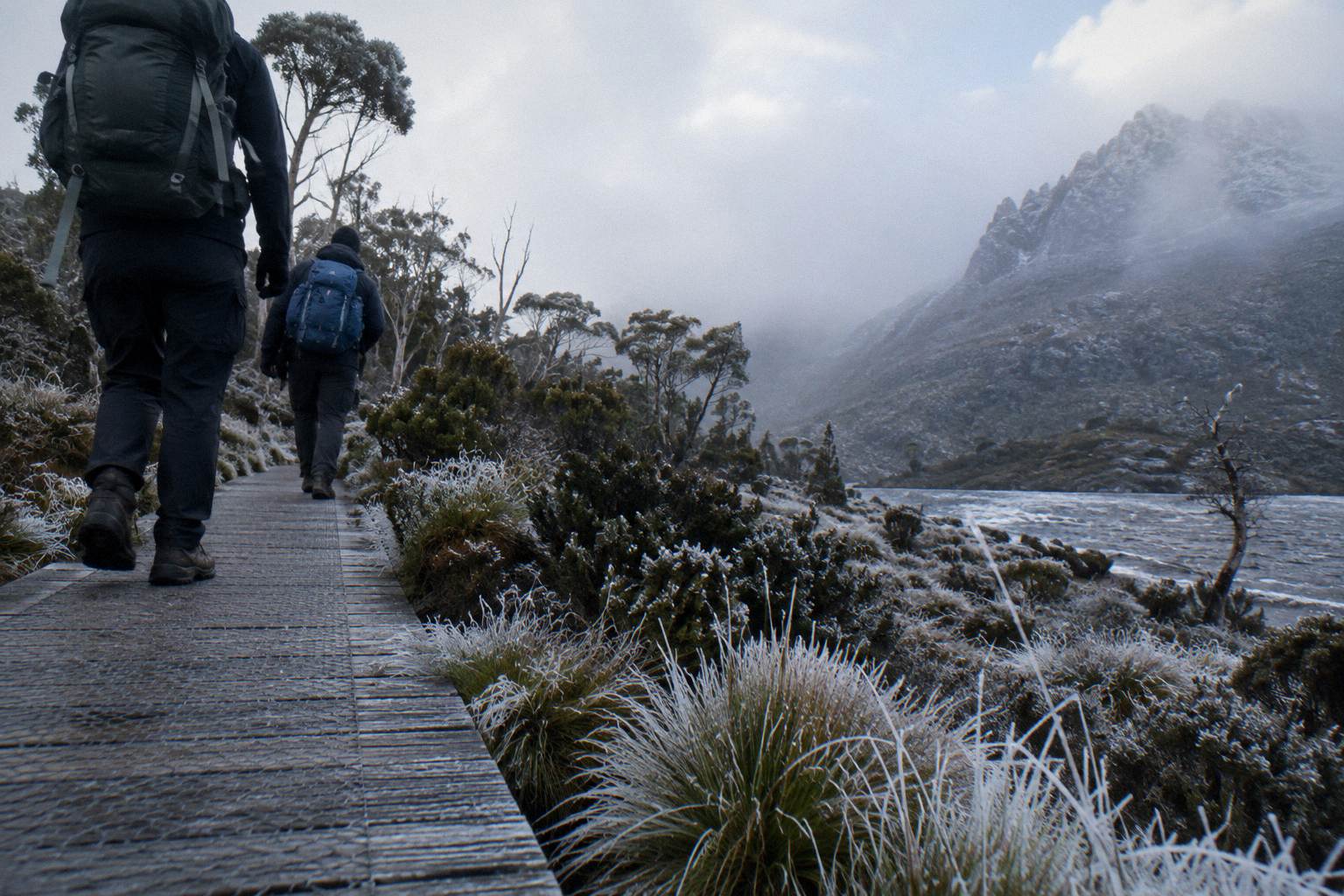
Winter, 1 June to 23 September, is registration only with a park pass. The walk usually finishes at Narcissus Hut, then a privately run ferry to the Lake St Clair visitor centre, for a fee and a booking, or a 17.5 km walk along the lake. Transport to Cradle and from Lake St Clair is not in the booking fee. The official Overland Track page is the authority on all of those numbers, and quotas sell out, so never plan around a date until you hold a booking.
Guided versions exist, run by specialists from their own sites. Tasmanian Walking Company runs a 7-day Overland Track Signature Walk starting at Red Feather Inn, Hadspen, near Launceston, with daily departures from 1 October to 1 May and a 5-day signature version on selected dates in October to November and April to May. Tasmanian Expeditions, part of the World Expeditions Travel Group, runs a 7-day Overland Track Cradle Huts walk also starting at Red Feather Inn, with up to 6 or 7 hours of walking a day. Ask each operator for its price. The choice between going alone or guided has its own comparison in Overland Track guided walk or independent, and the permits and dates are covered in Overland Track booking, dates and permits.
Walking Days Without Carrying A Pack: The Vehicle Bridge
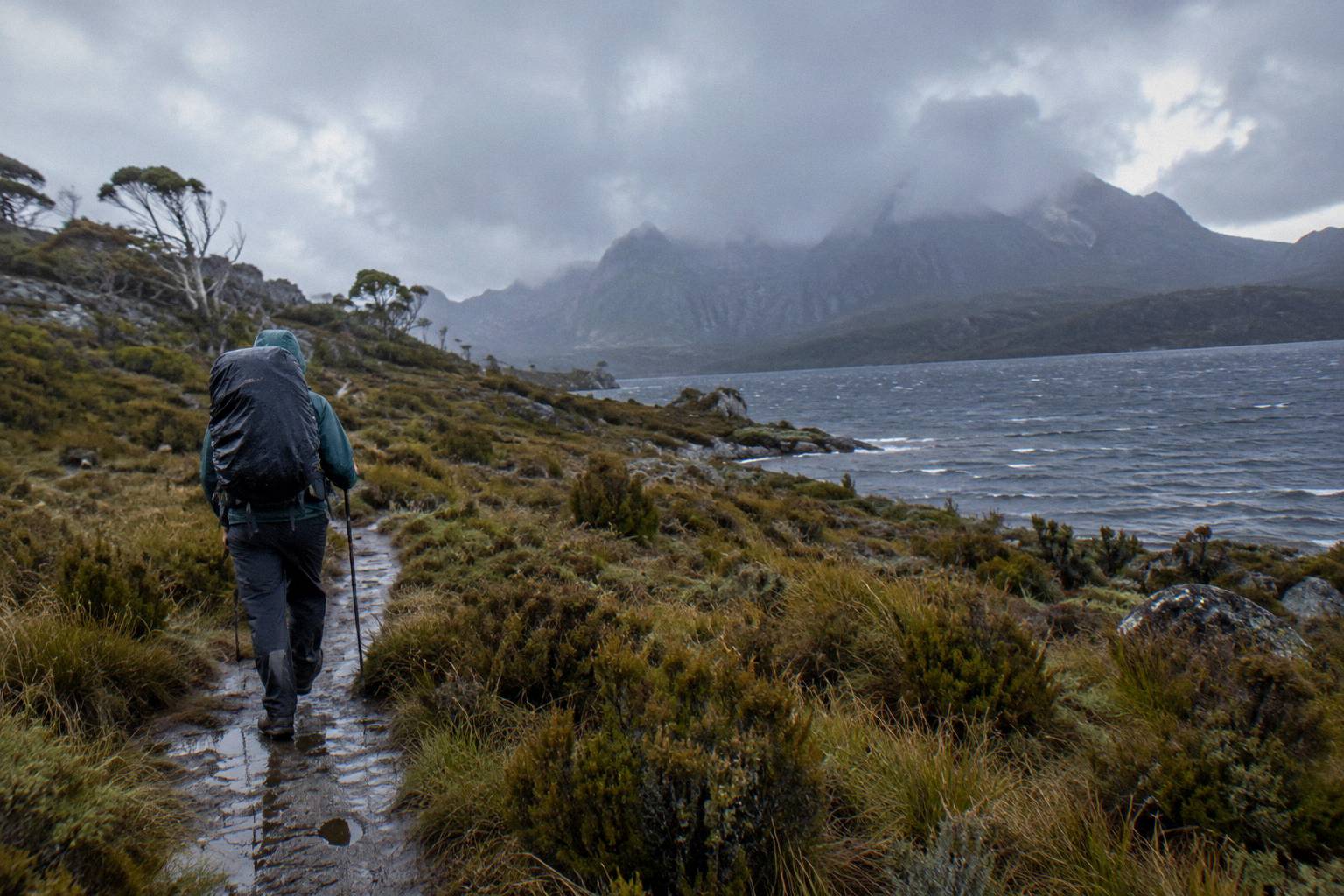
A vehicle-based walking tour is the answer: you get real walking days without carrying a pack or pitching a tent. The Maria Island Route runs 6 days and 5 nights from US$1,006 per person, caps groups at 13, and includes dinner and breakfast, while the 13-Guest Wildlife Trip adds Cradle Mountain and Freycinet.
These are not walking tours in the lodge or camp sense; they are minibus tours with guided walks attached. That distinction is worth stating plainly: the one lodge walk is the Lodge-Based Capes Walk, and every other walking-flavoured tour is a vehicle itinerary with stops. For many travellers that is exactly the right amount of walking: a morning on a track, an afternoon driven, a motel bed at night.
The Maria Island Route's accommodation line gives the flavour: Lakeside Lodge, secluded bush cabins, beachside bungalows and a two-night farm stay, per the operator. Day 6 finishes at Cape Hauy and the Tasman Peninsula, which is the same coastline the lodge walk covers on foot, so the two products genuinely overlap in scenery while differing completely in effort. Free cancellation applies up to 3 days before on both Wild Tasmania Tours trips, per their booking terms, while the lodge walk offers free cancellation up to 60 days before.
The comparison below puts the walking-forward vehicle trips side by side on the facts that matter, alongside the two Bay of Fires options. Tour amounts are US dollars, as throughout.
| Trip | Days | From price | Group max | Walking connection |
|---|---|---|---|---|
| The Maria Island Route | 6 days, 5 nights | US$1,006 | 13 | Day 5 on Maria Island by ferry; day 6 Cape Hauy |
| The 13-Guest Wildlife Trip | 4 days, 3 nights | US$703 | 13 | Cradle Mountain, Bay of Fires, Freycinet and Wineglass Bay |
| The Bay Of Fires Hike | 4 days, 3 nights | US$1,919 | Ask the operator | Starts Launceston; itinerary details on the booking page |
| The Overnight At Cradle | 2 days, 1 night | US$299 | 13 | Cradle Mountain shuttle ticket included |
Ask the operator on any vehicle tour how much walking each day involves and what footwear previous guests regretted bringing. The answer varies by trip, and it is the single best predictor of whether the itinerary will feel like a walking holiday with drives or a bus tour with stops.
Choosing By Traveller Type
Match the style to the traveller, not to the brochure. A walker who wants a bed, small group and cooked meals fits the lodge walk. A self-reliant walker on a budget fits the hut track. A traveller who wants camps without carrying a full load fits the bush-camp model. Someone who wants scenery with zero packing fits a vehicle tour with walking days, from US$703 per person on the wildlife trip.
| Traveller | Best fit style | Trip to compare | Key facts |
|---|---|---|---|
| Couple wanting comfort | Lodge walk | The Lodge-Based Capes Walk | 4 days, 3 nights, from US$2084, group max 10, free cancellation up to 60 days before |
| Independent walker on a budget | Self-guided hut track | Three Capes Track | 48 km, Grade 3, A$650 adult, bookings essential |
| Traveller wanting camps, light pack | Guided camping walk | The Maria Island Walk | 4 days, 10 to 15 km a day, packs 6 to 8 kg, ask the operator for price |
| Scenery-first, no packing | Vehicle tour with walks | The Maria Island Route | 6 days, from US$1006, group max 13, dinner and breakfast included |
| Short on time | Overnight or two-day trip | The Overnight At Cradle | 2 days, 1 night, from US$299, Lakeside Motel, breakfast included |
| Testing the water first | Day tour | The One-Day Cradle Fix | 10 hours from Launceston, from US$165, accommodation not included |
The one-day and two-day rows are real options, not filler: plenty of travellers use a single big day at Cradle Mountain to test their knees before committing four days to a walk. The Overnight At Cradle includes the national park ticket, the Cradle shuttle bus ticket and breakfast, with a group maximum of 13. Its itinerary runs Hobart to the north-west, then back via Cradle Mountain.
Solo travellers have a further wrinkle: twin-share pricing is standard on several walking products, including the bush camps on the Maria Island Walk, so ask about single supplements rather than assuming. The small-group tours for solo travellers guide answers that question across every option.
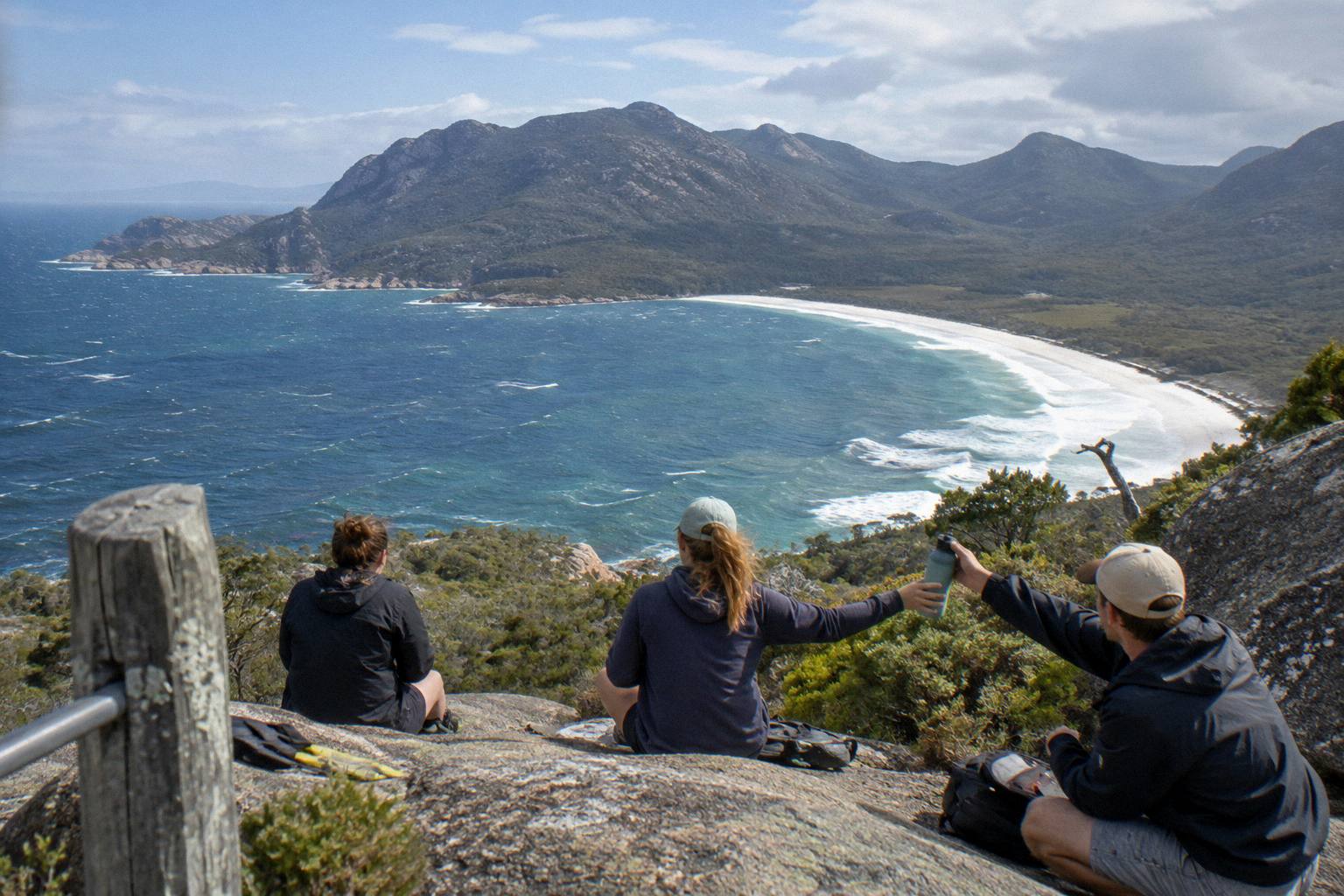
What Trips People Up Before Booking A Walking Tour
The recurring mistakes are assuming the hut track and the lodge walk are the same product, ignoring pack weight, skipping the cancellation terms, and forgetting the ferry. The Three Capes Track at A$650 is a self-guided parks product; the lodge walk from US$2,084 is a guided operator trip with different buildings and different rules. Neither covers your flights, and the refund terms differ from trip to trip.
Check these before paying anything. Confirm which product you are actually holding: operator, agency or operator-direct, because fees and refunds differ. Read the pack list and weigh your packed bag; the 6 to 8 kg band on the camping example is an operator's stated figure, not a suggestion. Check the tide rule if Maria Island is on your plan: the Painted Cliffs platform is safest within two hours of low tide, with no clifftop access. Book the ferry early: fares are published and sailings need reservations, and on the island there are no vehicles at all. Finally, tell the operator about any medical condition when you book, and check with your doctor first; no page here offers a fitness verdict.
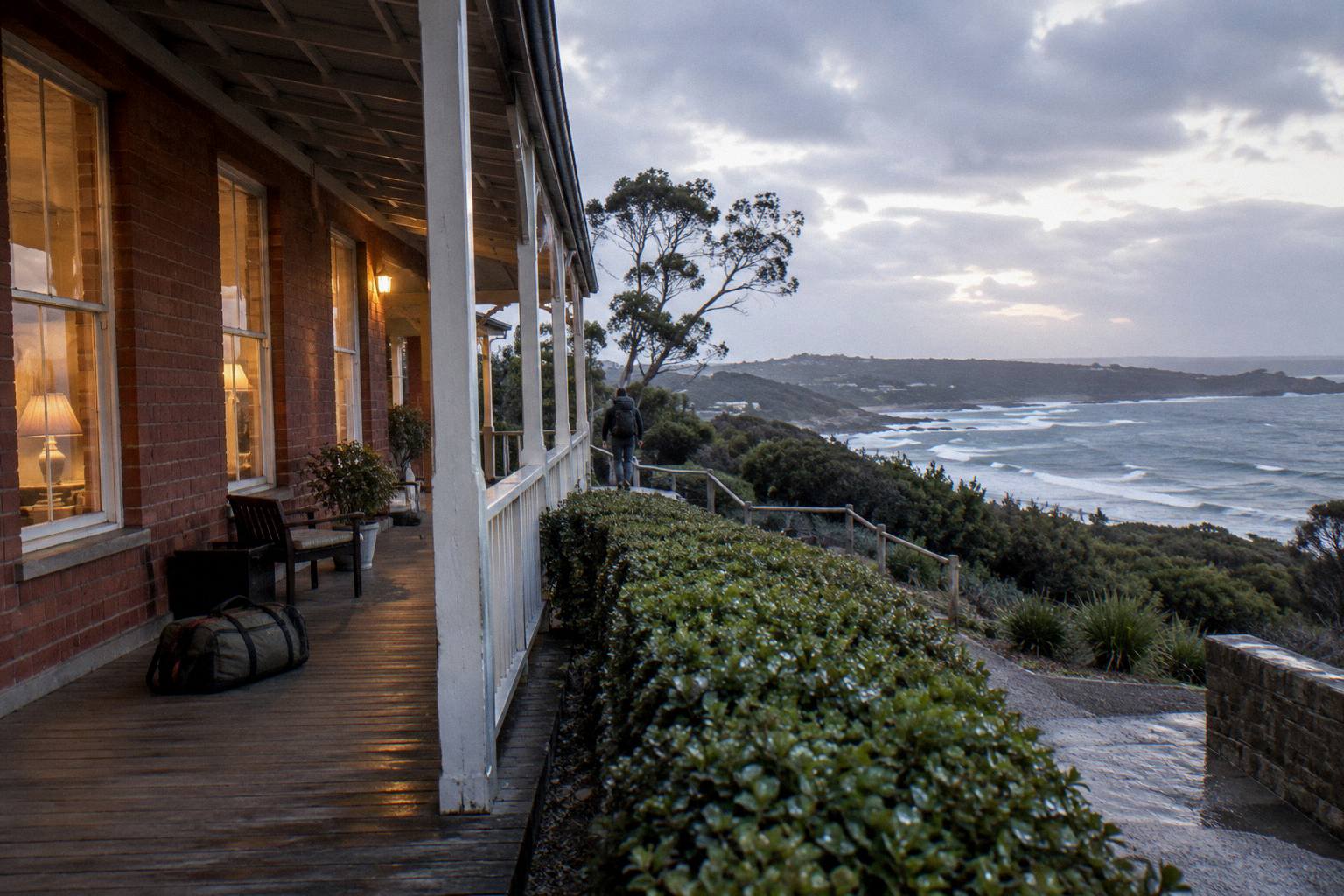
Choosing between a lodge bed and a camp site is the whole decision in miniature: comfort and cost against weight and self-reliance. Tasmania Multi-Day Tours exists to make that one comparison easier, with the published figures laid side by side rather than buried in itineraries. Whichever style wins, book the bed or the bunk early, because quotas and small groups do not wait.
Common Questions About Tasmania Walking Tours
Lodge Walks Or Camping Treks: Which Suits Tasmania Better?
Neither suits everyone. The lodge walk suits walkers who want a bed, meals and a group maximum of 10, from US$2,084 per person on the Lodge-Based Capes Walk. Camping suits walkers comfortable carrying 6 to 8 kg and sleeping under canvas, as on the Maria Island Walk's bush camps. Match the style to your knees and your budget, not to the scenery, because the scenery overlaps.
Can You Sleep In A Bed Every Night On A Tasmania Walk?
Yes, on two products. The Lodge-Based Capes Walk uses Stewarts Bay Lodge or Three Capes and Tasman Lodge, and the Three Capes Track uses hut bunks with a fuel stove for cooking. The Maria Island Walk mixes twin-share bush camps with Bernacchi House on the final night. Ask the operator about any night you are unsure of.
How Heavy Is The Pack On A Guided Camping Walk?
The one published figure is 6 to 8 kg on the Maria Island Walk, with pack loan included, per that operator. Hut walking on the Three Capes Track means carrying your own food, stove and sleeping gear with no published weight. A fuel stove is the only stove allowed in the World Heritage Area.
Is The Three Capes Track The Same As The Lodge Walk?
No. The Three Capes Track is a self-guided, hut-based walk run by the Parks and Wildlife Service at A$650 adult, 48 km over 4 days, Grade 3. The lodge walk is a guided trip with private lodges, meals and a group maximum of 10, from US$2,084 per person, run by an operator. Different fees, different buildings, different rules.
Do Any Of These Walks Include Park Fees?
Yes, on several. The lodge walk fare includes park entry fees; the hut track fee includes park entry plus one day either side; the Overland Track fee of A$312 includes park entry and the Cradle shuttle. Vehicle tours vary: the 13-Guest Wildlife Trip includes national park tickets, per its inclusions. Ask the operator where a pass is not clearly covered.
Can You Walk In Tasmania Without A Guide And Without Camping?
Yes, on the Three Capes Track, which is self-guided and hut-based with bookings essential. The Overland Track is also walked independently in its booking season from 1 October to 31 May, with up to 34 independent departures a day, north to south only. Both carry their own fees and rules through the Parks and Wildlife Service.